

Cart
0
Introduction
Your backpacking gear list has some new additions. Cell phones, GPS devices, and headlamps - these must-have backpacking gear items all need charging. Whether you’re trekking in the Himalayas, exploring the Western Ghats, or hiking desert trails in Rajasthan, staying powered matters more than ever.
Most hikers grab a random power bank and either carry too much weight or run out of battery mid-trail. The smarter solution? Calculate what you actually need based on trip length, terrain, and resupply access.
In this guide, we’ll help Indian backpackers understand how much power they truly need and how to choose the right solution for everything from short day hikes to extended thru-hikes.
How Much Battery Power Do You Need for Backpacking?
1. Trail Duration Matters
|
Trail Duration |
Extra Power Need |
What This Implies |
|
Day hike |
Near-zero |
Usually no dedicated backup power needed |
|
Overnight (1 night) |
A bit |
Small buffer for phone + headlamp + watch |
|
Multi-day (3–7 days) |
Needs planning |
You’re managing “days between charges” |
|
Thru-hike |
Different Strategy |
Power plan depends on resupply rhythm |
In India, trail duration often links directly to accessibility. Many popular treks like Triund or Rajmachi are short, while routes such as Roopkund or Sandakphu require careful power planning due to limited charging points.
2. Resupply Frequency
|
Resupply Pattern |
Buffer Level |
Typical Strategy |
|
Town each night |
Very low |
Top up often; carry minimal spare power |
|
3–5 days between towns |
Medium |
Carry enough for the full gap |
|
~7 days in wilderness |
High |
Larger battery plan or portable power station |
Indian treks often pass through villages, but electricity can be unreliable. A power buffer protects you when homestays or dhabas can’t offer charging.
3. Device Inventory
|
Device Tier |
What’s Included |
Power Impact |
|
Essentials |
Smartphone, GPS watch, rechargeable headlamp |
Baseline |
|
Essentials + optional |
Camera, action cam, satellite communicator |
Noticeable increase |
|
Heavy add-ons |
Drone, laptop, DSLR |
2–3× higher needs |
For most Indian backpackers, the smartphone is the biggest power draw - used for maps, photos, weather updates, and emergency calls.
How to Quickly Calculate Your Power Needs
|
Formula: Total mAh needed = (Daily use × Days between charges) × 1.3 |
Example: A 4-Day Backpacking Trip
-
Smartphone: 3,500 mAh/day × 4 days = 14,000 mAh
-
GPS Watch: 650 mAh/day × 4 days = 2,600 mAh
-
Headlamp: One charge ≈ 400 mAh
Total: 17,000 mAh
💡Add 30% buffer: 22,100 mAh
For this trip, a 20,000–25,000 mAh solution is ideal.
When building your backpacking packing list, always start with the must-have backpacking gear that consumes power - then scale up only if needed.
Day Hikes and One-Night Trips: Keep Power Simple
Quick Guide
|
Trip Type |
Duration |
Power Needed? |
Capacity |
Why? |
|
Day hike |
6–12 hours |
No |
- |
Phone lasts full day in airplane mode |
|
Long day hike |
12–15 hours |
Optional |
5,000 mAh |
Backup for heavy photo use |
|
Overnight |
24–36 hours |
Yes |
5,000–10,000 mAh |
One full phone recharge |
Day Hikes: No Power Bank Needed
Charge your phone fully the night before and again in your car or bus before reaching the trailhead. This simple habit often eliminates the need for extra power.
Overnight Trips: Small Backup Only
A lightweight 5,000–10,000 mAh power covers one full recharge - perfect for short Himalayan or Western Ghats overnighters.
Multi-Day Backpacking: Balancing Battery Weight and Runtime
Daily Power Consumption Breakdown
|
Device |
Daily Usage |
Power Consumed |
|
Smartphone (navigation) |
8–12 hours GPS |
3,000–4,000 mAh |
|
GPS watch |
24-hour tracking |
500–800 mAh |
|
Headlamp |
2–3 hrs every few days |
300–500 mAh |
|
Total Daily Consumption |
~4,000–5,000 mAh |
When a Portable Power Station Makes Sense
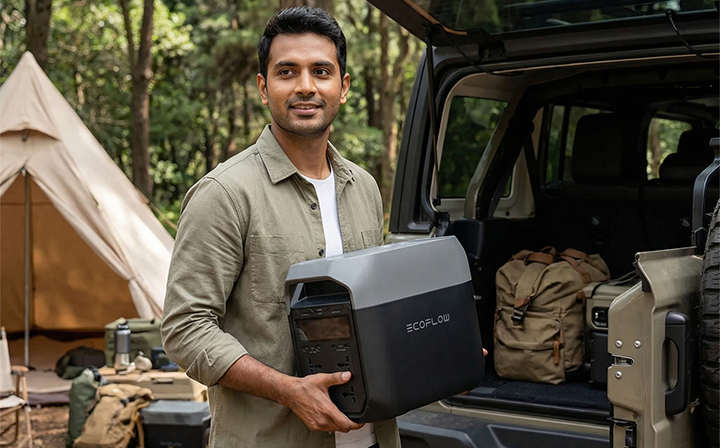
For longer adventures, group treks, or content creators, a standard power bank can fall short. This is where compact portable power stations shine - offering higher capacity, faster charging, and multiple output options.
Why Choose EcoFlow for Backpacking in India
EcoFlow is trusted globally for lightweight, high-efficiency power solutions - and their RIVER series fits perfectly into the Indian backpacking context.
EcoFlow RIVER 2
-
Ultra-lightweight with serious output
-
Ideal for solo trekkers or minimalist backpackers
-
Fast charging before you leave town
-
Perfect when weight matters but reliability is critical
EcoFlow RIVER 3
-
Balanced capacity for multi-day trips
-
Supports multiple devices simultaneously
-
Reliable for areas with unpredictable power access
EcoFlow RIVER 3 Plus
-
Higher capacity for longer gaps between charging
-
Ideal for group treks, photographers, or long expeditions
-
Handles cameras, phones, lights, and more
Final Takeaway: Power Smarter, Not Heavier
Backpacking in India demands flexibility - terrain changes fast, weather turns quickly, and power access isn’t guaranteed. Instead of guessing, calculate your real needs based on trip length, resupply frequency, and devices carried.
For short trips, keep it simple. For longer adventures, invest in reliable, lightweight power solutions that won’t let you down when you’re far from the nearest socket. With the right planning - and the right EcoFlow gear - you stay connected, safe, and focused on the journey ahead.


